Evolution of logistics during the last century
Let’s review the evolution of logistics since the 30s until now.
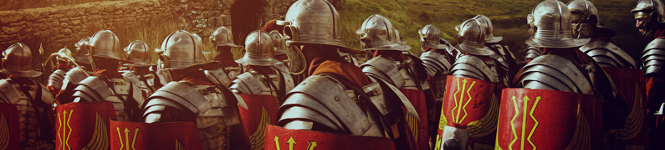
Years 30 “Military logistics”
After the Second World War, the interest of business by the logistics process arises and an analogy is established between military logistics and technical material supply and military logistics is begun to be related to industrial production.
Years 50 “Conceptualization of logistics”
Logistics becomes more important due to the transition that goes through the most developed countries, from an economy characterized by excessive demand to an economy with excess supply, with these being their main characteristics:
- First developments of the total cost of logistics operations.
- It focuses on the concern to satisfy the customer.
- Distribution channels are of particular importance. You want to sell any product anywhere.
- Increase new products, as a result the product lines are originated.
60 Years “Outsourcing”
Logistics took a new approach where “outsourcing” was the most appropriate mechanism to reach customers, since it had as its main objective the subcontracting of other companies because the flow of goods or information was efficient and reached all parts That were within the reach of the company.
Years 70 “The concept of trial logistics”
- Customer service becomes an indispensable requirement to continue competing with market leaders.
- Progress in the concept of physical distribution.
- There are periods of recession and growth in the world economy.
- Development of the inventory management strategy.
- The technology for the industrial revolution that occurred during these times began to emerge, and the cost of information technology was reduced to improve the quality, which brought about an improved mechanism for the supply of the goods Or information accurately and precisely at the time the customer made their order, this mechanism is called “Just in Time”, that is just in time
Since the 80’s “Modification of preferences”
- The energy crisis of the moment drives the movement towards the improvement of transport and storage.
- Just in Time’s approach was modified by Quick Response (QR) and Efficient Consumer Response (ECR) with the sole purpose of seeking a precise delivery with the exact amount, when and where needed, to meet To the customer.
- Changes in supply chain preferences where special attention is paid to suppliers, distributors and customer service, defining the end-user’s demand.
- Inventories, total logistics costs are reduced, and delivery times are shorter.
- Logistics operations are energy-intensive: environmental-ecological concern is born.
1990 “Promotion of logistics”
Logistics went on to become a more integrated process in terms of its external and internal environment, in other words, its internal processes within the company were managed according to the relationships that were with its customers and suppliers.
This process of integration causes logistics management to begin with a strategic plan regarding the design of how to reach the final customers, in order to go out and minimize competition, establishing efficient plans for the supply of the products.
- Technology continues to position itself in conventional Logistics processes and Distribution channels
- Outsourcing services
- Demand for logistics services expands
Conclusions
Day by day it is observed that to put into practice a good business logistics management is essential, it has developed over time and is now a basic aspect.
A perfectly designed logistics project is the most strategic tool to compete with the demanding current market, achieving customer loyalty.
All these changes that were adapted over time in the administration of the logistics caused not only to administer an internal process that goes from the manufacture of the product until it acquires the client, but now it is ‘They analyze a whole network of supplies that involve various process flows, which is now known as the supply chain management, which must also take into account intermediate customers such as distributors and retailers in the process What is done because the product arrives at the customer.
This supply chain involves several stages such as suppliers, manufacturers, distributors, retailers and clients, which the new administration integrates them interconnectively, since each one is self-sufficient in an increasingly competitive market. Supply chain management currently seeks integration into all the decision phases in its Chain, which has had a great growth for the revolution of technology, which has led to the strategies being based on the quality of the relations between the participants in the supply chain, which seeks to align them with the objectives Of the company. All in order to give a better service to the end customer, in addition to giving greater satisfaction value and the customer to become loyal to the company.

Alineem estratègies i sumem esforços per potenciar l’activitat industrial a les pimes | Alineamos estrategias y sumamos esfuerzos para potenciar la actividad industrial en las pymes.
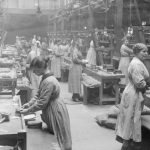 During the process of industrialization, companies began to work in a more complex logistics chain to reduce the essential objectives of the industrial company in the most efficient way possible with minimal effort. The companies that adapted to the changes in the logistics of their production chain were positioned as leaders during this time, acquiring great competitive advantages.